
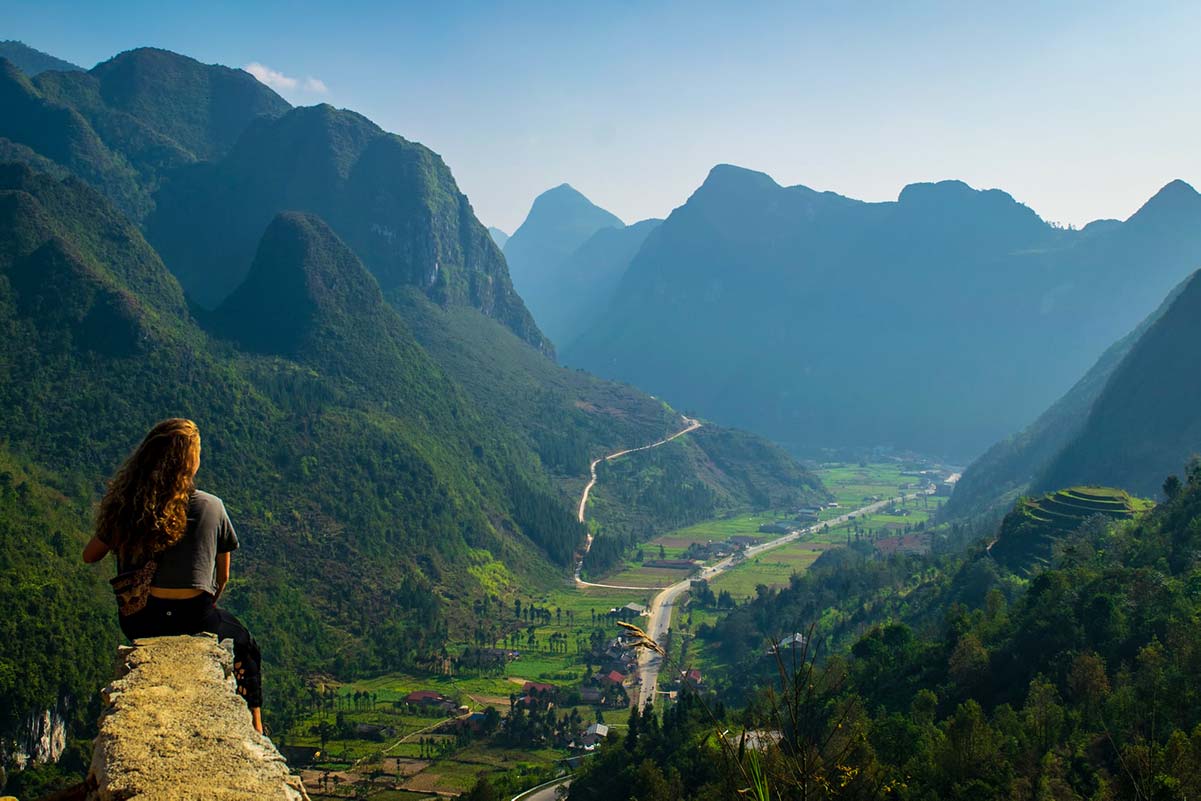
Misty mountains rise beyond every bend – this Ha Giang Loop travel guide is for those who crave the real North of Vietnam. The Loop winds through limestone peaks, hidden valleys, and ethnic villages where time moves slowly and smiles come easily. Over days on the road, travelers trace routes that reveal Vietnam’s wild beauty – quiet dawns over terraced rice fields, tea shared in Hmong homes, wind on the face along Ma Pi Leng Pass.
This guide helps you plan your route, choose your ride, and travel the Ha Giang Loop responsibly.
Choose your way to explore the Loop – by Jeep or Motorbike.
1. Ha Giang Loop Travel Guide Overview: The Road to the Far North
At Vietnam’s northern edge, the Ha Giang Loop unfolds – a road of mountains, mist, and timeless highland life.
Where is Ha Giang? Vietnam’s northernmost frontier.
Ha Giang lies in Vietnam’s far north, bordering China and rising into the Dong Van Karst Plateau – a UNESCO Global Geopark. The province is a land of limestone peaks, deep valleys, and remote ethnic villages. ~300 km from Hanoi, yet feels like another world – where every turn brings a new view, a new smile, and the spirit of the true North.
Map of the Ha Giang Loop – key districts and distances.
The full Ha Giang Loop covers about 350 km, circling through Ha Giang City – Quan Ba – Yen Minh – Dong Van – Meo Vac – Du Gia – back to Ha Giang. Each section reveals a different landscape – from pine-covered passes to rocky plateaus and rice-filled valleys. Travelers usually ride 3 to 5 days, following a loop that connects the heart of Vietnam’s most stunning mountain province.
What makes this loop legendary among Vietnam road trips.
The Ha Giang Loop is more than a scenic ride – it’s Vietnam’s final frontier for adventure and connection. Here, the road cuts through clouds above the Ma Pi Leng Pass and winds past villages untouched by time. Travelers call it legendary because it blends freedom, culture, and raw beauty like nowhere else in Southeast Asia – a journey that stays long after the dust settles.
2. How to Get to Ha Giang from Hanoi
The journey to Ha Giang begins long before the mountains – a night road north that leads to adventure and calm.
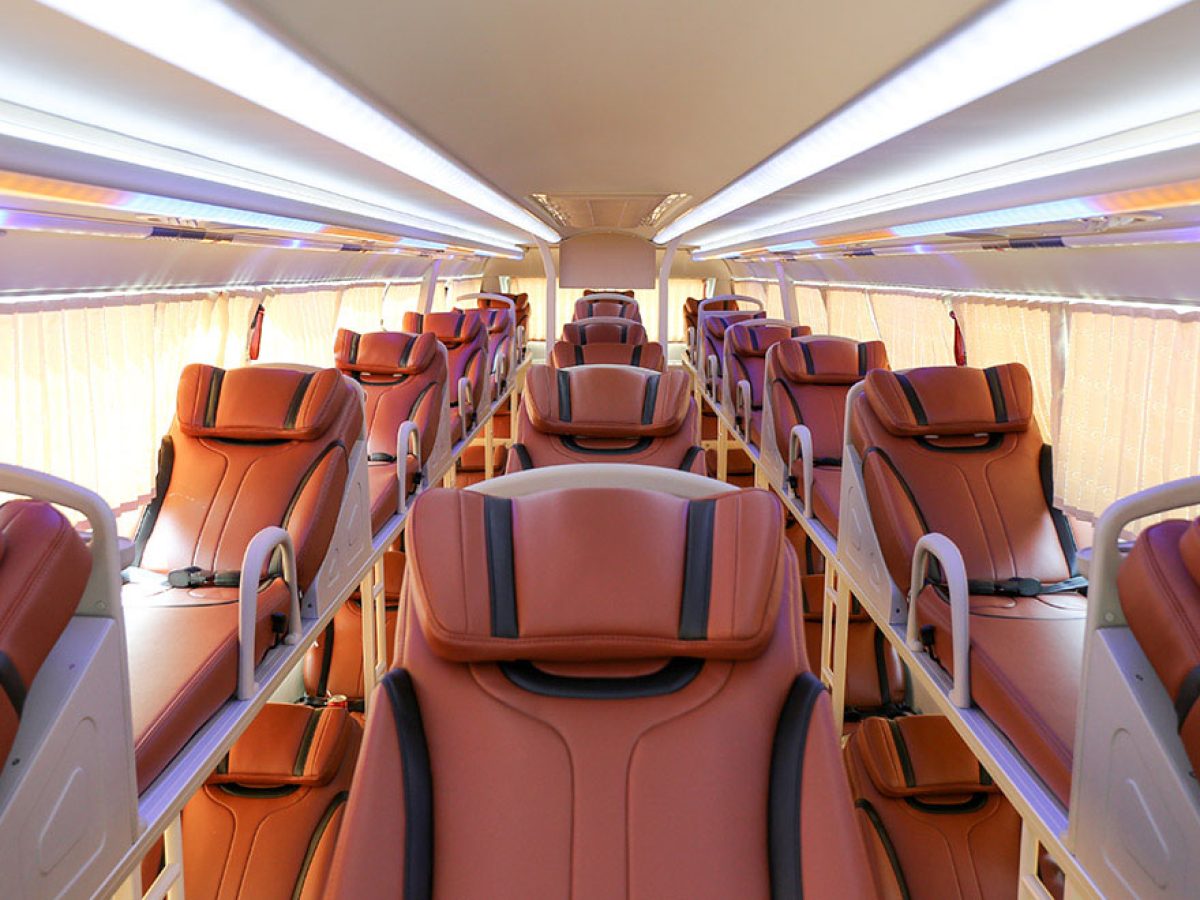
Overnight sleeper bus & limousine options.
Most travelers reach Ha Giang overnight from Hanoi, a ~6 hours trip. The VIP sleeper bus offers private cabins for comfort, while luxury limousines suit smaller groups seeking a smoother ride. Buses depart nightly around 7:30 – 8:00 PM from Hanoi’s Old Quarter and arrive in Ha Giang around 3:00 AM – just in time to rest before the Loop begins.
Where to stay before starting the Loop (QT Guest House or local bases).
Many riders stay at QT Guest House or similar local lodges – friendly, family-run places that specialize in Loop travelers. Rooms are simple but clean, with warm showers, breakfast, and gear storage. These bases also serve as checkpoints for tour briefings, motorbike rentals, and local tips before heading into the mountains. It’s where the Loop truly begins – over coffee and mountain air.
Tips for arriving early and resting before your ride.
Arriving early gives you time to adjust after the long drive. Most guest houses offer early check-in, showers, and short naps before breakfast. Use the morning to stretch, enjoy a local bowl of pho, and prepare your gear. Start your Loop ride around 8:00 AM – refreshed, alert, and ready for the mountain roads ahead.
Practical Travel Note: Book your sleeper bus or limousine ticket 1 – 2 days in advance during peak season (September – November). Confirm your pickup point in Hanoi’s Old Quarter, and let your Ha Giang guest house know your arrival time – most offer early check-in for night arrivals.
3. The Ha Giang Loop Route Explained
The Loop traces 350 kilometers of mountain roads – a journey through changing landscapes, cultures, and the soul of Ha Giang.
350 km of mountain magic – from Ha Giang City to Du Gia.
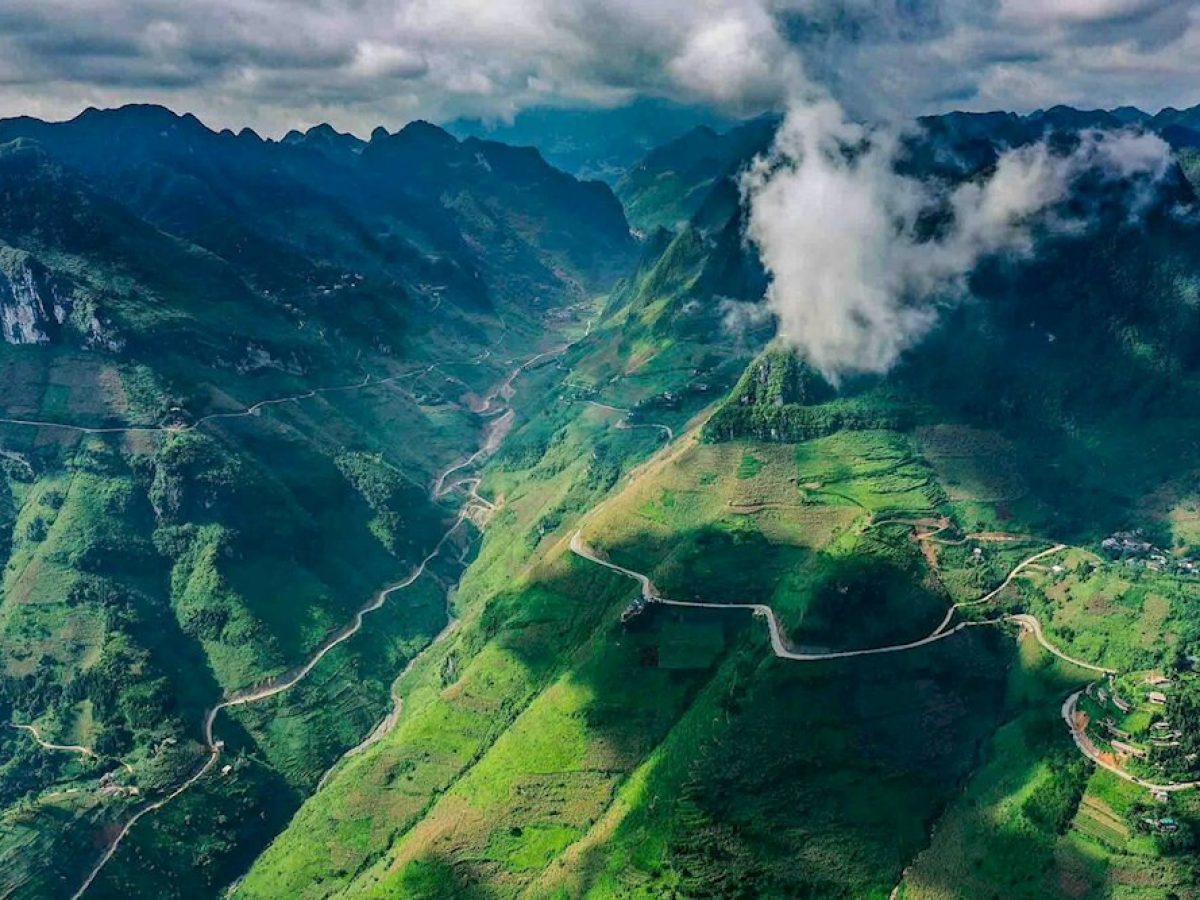
The Ha Giang Loop begins and ends in Ha Giang City, circling through four main districts – Quan Ba, Yen Minh, Dong Van, and Meo Vac – before returning via Du Gia. Across 350 kilometers of curving roads, every section offers new scenery: pine forests, limestone ridges, rice terraces, and deep valleys. Whether by Jeep or motorbike, each kilometer unfolds like a moving postcard of Northern Vietnam.
Must-see stops: Quan Ba Heaven Gate, Dong Van Old Quarter, Ma Pi Leng Pass.
At Quan Ba Heaven Gate, clouds roll over the Fairy Bosom Hills and Tam Sơn Valley. Farther north, the Dong Van Old Quarter reveals stone houses and quiet lanes echoing the past. And then comes the Ma Pi Leng Pass – the Loop’s crown jewel – where the road clings to cliffs above the emerald Nho Que River and the world seems to stand still.
Alternate detours – Lung Cu, Lo Lo Chai, and Du Gia waterfall.
For travelers with extra time, take the detour north to Lung Cu Flag Tower, Vietnam’s northernmost point, and nearby Lo Lo Chai Village, home to vibrant traditional culture. To the south, Du Gia Waterfall offers a serene valley escape – ideal for a final night of peace before the return to Ha Giang City. Each side road leads deeper into local life and quieter landscapes.
Practical Travel Note:
Most travelers ride the full Loop in 3 to 5 days. Roads are mostly paved but can be narrow and steep in parts. Drive slowly, take breaks, and always yield to local traffic – safety brings you the best views.

4. When to Visit: Ha Giang Loop Travel Guide by Season
Every season in Ha Giang paints a different story – from golden harvests to misty peaks and blooming mountain trails.
September – October: golden rice & clear skies.
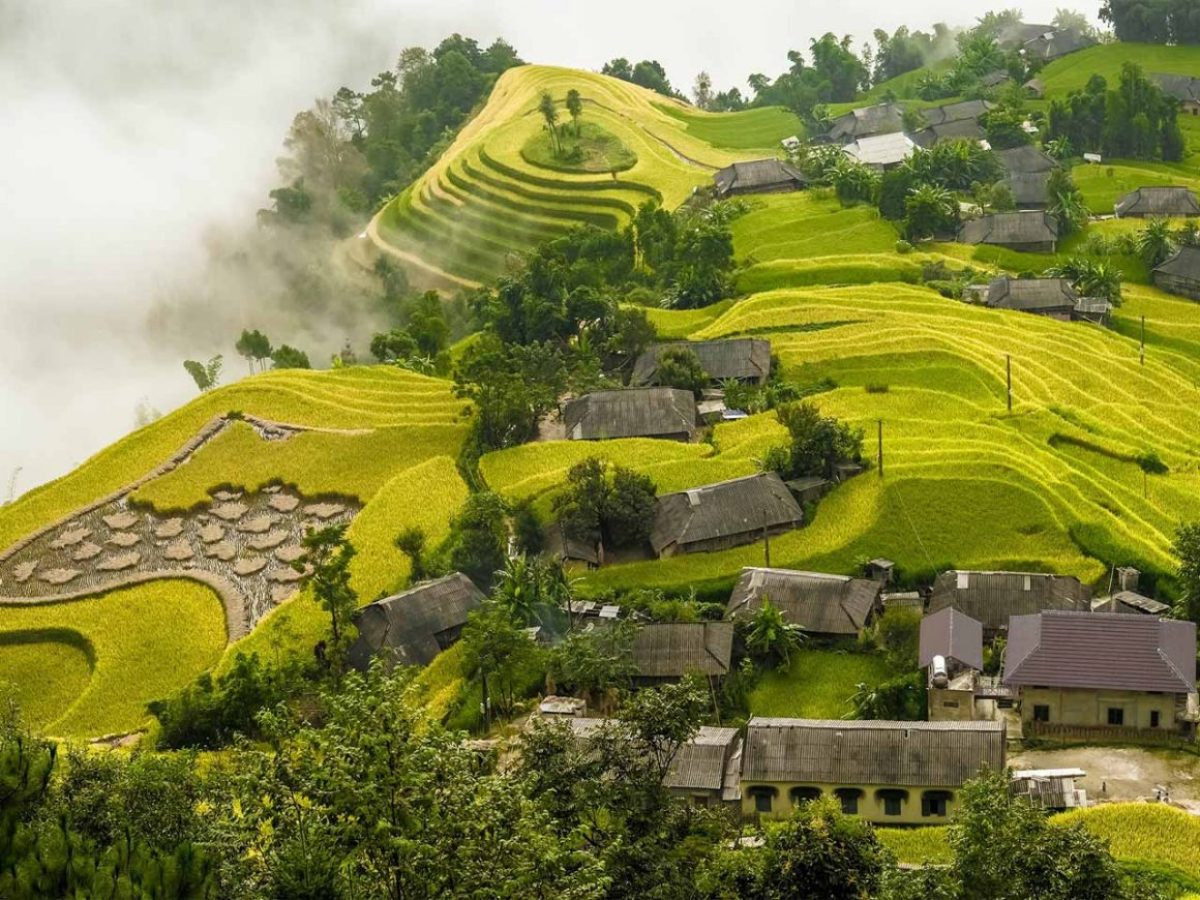
Autumn is the most photogenic time to ride the Ha Giang Loop. Terraced fields glow gold in the harvest sun, stretching from Quan Ba to Du Gia. The air is dry, the skies are clear, and the light is soft for photography. These months are perfect for long scenic drives, mountain picnics, and peaceful evenings under starry skies.
November – February: cool weather & mountain mists.
Winter brings Ha Giang a calm, poetic charm. Cool winds drift through limestone valleys, and mist settles around the Ma Pi Leng cliffs. It’s the quiet season – fewer travelers, gentler light, and cozy evenings in wooden homestays. Pack a jacket, sip warm tea by the fire, and enjoy the slower rhythm of northern mountain life.
March – August: green valleys, flowers, and summer rains.
Spring and summer color the Loop with wildflowers, new rice shoots, and bright morning light. March sees peach and buckwheat blossoms, while May to August brings lush green valleys after light afternoon rains. Roads can be slick, but the scenery turns vivid – ideal if you enjoy a wilder feel.
Practical Travel Note:
Each season offers its own rewards. September – April is ideal for clear skies and photography; May – August suits those who prefer solitude and lush scenery. Always check weather forecasts and pack layers – mountain weather shifts fast.
Read more: Best time to visit Ha Giang Loop
5. How Long Does the Ha Giang Loop Take?
Time shapes the Loop experience – rush it and you’ll see the views, slow down and you’ll feel the mountains.
3D2N, 4D3N, or more – what fits your style.
Most travelers complete the Ha Giang Loop in 3 to 5 days. The 3D2N route covers the highlights – Dong Van, Ma Pi Leng, and Du Gia – ideal for those short on time. The 4D3N option adds deeper cultural stops like Lung Cu and Lo Lo Chai, while longer itineraries allow detours, rest days, or even hiking add-ons. More days mean more stories, not just more distance.
Fast vs slow itineraries (Jeep comfort vs Motorbike adventure).
Each pace offers a different kind of freedom. Traveling by Jeep brings comfort and time to engage with people and places – perfect for couples or families. Riding a motorbike adds thrill and independence, letting you chase the horizon and feel every curve. Both ways capture the essence of Ha Giang – one more reflective, the other more raw.
Suggested pacing for photographers & culture seekers.
For photographers, start early each day to catch the mountain light – soft sunrise mist in Quan Ba, sunset glow at Ma Pi Leng. Culture seekers can linger longer in Nam Dam, Dong Van, or Du Gia to join local meals or weekend markets. In Ha Giang, slowing down is not a delay – it’s how the real journey unfolds.
Practical Travel Note:
If you have the time, choose 4D3N or 5D4N – the best balance of scenery, rest, and cultural depth. Shorter trips fit tight schedules, but always plan your return to Hanoi carefully. Night buses depart around 4:00 – 5:00 PM, so finish your Loop by midday on the final day.

6. Choose Your Ride: Jeep or Motorbike Adventure
Two ways to conquer the same mountains – one smooth and scenic, the other wild and free. Both unforgettable.
Ha Giang Loop Jeep Tour – Comfort, safety & cultural immersion
The Ha Giang Loop Jeep Tour blends adventure with ease. Ride in a private open-air Jeep with a professional local driver who knows every bend of the mountain. This style suits couples, families, or travelers who want comfort without missing authenticity. Enjoy safe routes, deep cultural moments, and a slow rhythm that lets you feel the real Ha Giang.
Ride the Loop your way:
• Private Jeep • Pro Guide • Safe Route • Family Friendly • Cultural Touch
Ha Giang Loop Motorbike Tour – Freedom, thrill & open road
The Ha Giang Loop Motorbike Tour is for those who crave the road itself – the curves, the wind, the feeling of freedom. Ride solo or join an Easy Rider guide and follow the trail through limestone peaks and misty valleys. It’s raw, thrilling, and deeply personal – a ride you’ll remember long after the dust settles.
Own the Loop your style:
• Raw Freedom • Epic Roads • Rider Support • True Challenge • Personal Story
Shape Your Ha Giang Story – Custom Jeep & Motorbike Routes
Your journey doesn’t have to fit a template. Mix Jeep comfort with motorbike thrill, add hidden trails or quiet homestays – shape the Loop to match your rhythm. Local guides can tailor routes for sunrise chasers, culture lovers, or those who simply want time to breathe. In Ha Giang, every traveler writes their own mountain story.
Create your route:
• Flexible Plan • Tailored Itinerary • Jeep & Bike Mix • Hidden Trails • Local Life
Jeep vs Motorbike vs Custom Tour – Which Adventure Fits You Best?
| Style | Jeep Tour | Motorbike Tour | Custom Tour |
|---|---|---|---|
| Experience | Comfortable & scenic | Adventurous & raw | Personalized & balanced |
| Best For | Couples, families, comfort seekers | Solo riders, thrill lovers | Mixed groups or travelers wanting both |
| Pace | Slow & immersive | Fast & flexible | Tailored to your rhythm |
| Safety Level | High (pro driver) | Moderate (self-ride or Easy Rider) | Adjustable with guide or support Jeep |
| Connection | Deep cultural immersion | Freedom & self-discovery | Blend of culture, comfort, and freedom |
Each path tells a different Ha Giang story – choose what fits your pace, your people, and your sense of adventure.
Practical Travel Note:
Whichever way you travel – guided, custom, or on your own – preparation is key. Check your vehicle, weather, and travel permits before departure. Local guides and operators know the terrain, safe routes, and hidden gems, but the Loop always welcomes those ready to explore responsibly.

7. What to Pack & Prepare for the Loop
Preparation turns adventure into comfort – the right papers, clothes, and mindset make your Ha Giang Loop smooth and safe.
Permits, travel documents & motorbike license tips.
All travelers must carry a Ha Giang travel permit, available at local police stations or arranged by your tour provider. Keep a copy of your passport, visa, and accommodation details. For motorbike riders, an international driving permit (IDP) is required, especially for manual bikes. Jeep travelers can relax – licensed local drivers handle all paperwork. Carry cash, as ATMs are rare in mountain towns.
Keep a photo of your permit and passport on your phone.
Clothing essentials for different seasons.
Ha Giang’s weather changes with every pass. Pack layered clothes – light T-shirts for day rides, a warm jacket for cool evenings, and a rain shell for sudden showers. Gloves, scarves, and sturdy shoes make a difference on mountain roads. In summer, bring quick-dry wear; in winter, fleece and thermal layers. Comfort matters more than style – mountain air is fresh but unpredictable.
Safety gear, first aid, and cultural gifts to bring.
Whether riding or driving, bring a helmet with visor, gloves, and a small first-aid kit. Sunscreen, lip balm, and a refillable water bottle go a long way. Small gifts for locals – tea, notebooks, or candies for children – are thoughtful gestures during village visits. Most of all, pack respect and curiosity; they open more doors than anything in your bag.
Pack a hi-vis rain cover and a headlamp for dusk rides
Practical Travel Note:
Travel light but smart. Essentials fit in one backpack – clothes, documents, toiletries, and electronics. Keep valuables waterproofed. If joining a Jeep or Easy Rider tour, luggage transfer is usually included. Bring what you need, not what you own – the Loop rewards simplicity.

8. Local Culture & Responsible Travel
Beyond the roads and passes, the Ha Giang Loop is a meeting of cultures – where every smile tells a story.
Meeting Hmong, Tay, and Dao communities.
Ha Giang is home to 17 ethnic groups, with the Hmong, Tay, and Dao communities shaping most of the Loop’s villages. You’ll see Hmong women in indigo hemp dresses, Tay families in stilt houses, and Dao people with their red scarves and herbal baths. Each group has its own traditions, markets, and rhythms. A respectful smile or a shared cup of tea often bridges every difference.
Homestay etiquette & photography respect.
Staying in a local homestay offers a glimpse of daily mountain life. Always remove your shoes before entering, wait to be invited to the meal, and say thank you in Vietnamese – cảm ơn. When taking photos, ask first, especially in villages and markets. Respect isn’t a rule here – it’s the key to meaningful connection.
How Jeep & Motorbike tours support local families.
Both Jeep and Motorbike tours play a big role in sustaining local communities. Licensed local guides, drivers, and homestay owners earn directly from tourism, helping preserve traditional crafts and village life. Traveling responsibly – booking local, eating local, and staying local – keeps Ha Giang’s economy circular and its culture alive. Your journey fuels more than memories; it supports a way of life.
Practical Travel Note:
Carry small cash for local markets, buy handmade crafts directly from villagers, and avoid plastic waste. Bring your curiosity, patience, and kindness – they matter as much as any gear. The more gently you travel, the deeper Ha Giang opens to you.

9. Ha Giang Loop Travel Guide Itinerary Highlights
Every turn of the Loop tells a story – from misty high passes to quiet valleys where mountain life moves unhurriedly.
Need help planning your route? Check the Ha Giang Loop Map & Route Guide to see daily distances, highlights, and hidden turns.
Ha Giang → Quan Ba → Dong Van → Meo Vac → Du Gia.
This is the classic Ha Giang Loop route, unfolding like a ribbon through five districts. Start from Ha Giang City, ascend the Quan Ba Heaven Gate, and follow mountain curves to Dong Van and Meo Vac. Descend into Du Gia Valley, a peaceful green haven before looping back. Each leg of the journey feels distinct – pine forests, stone plateaus, deep canyons, and rice terraces flowing like gold.
Ma Pi Leng Pass & Nho Que River – the heart of the Loop.
No part of the Loop captures its spirit like Ma Pi Leng Pass. The road hugs cliffs above the Nho Quế River. The view feels timeless. Here, the Tu San Canyon cuts the landscape in emerald silence – Southeast Asia’s deepest gorge. Whether by Jeep, motorbike, or on foot, this is where Ha Giang reveals its raw, breathtaking soul.
Optional side trails for slow travelers & hidden spots.
If time allows, wander off the main road. Visit Lung Cu Flag Tower, Vietnam’s northernmost point, and nearby Lo Lo Chai Village, known for its colorful houses and music. In the south, Du Gia Waterfall and Nam Dam Village offer calm nights and cultural warmth. These side trails slow the pace so you see not only landscapes, but quiet daily life beyond the road.
Practical Travel Note:
Three to five days let you see the Loop, but a week lets you feel it. Take breaks often, stay an extra night where it feels right, and don’t rush the mountains – they reveal their beauty slowly.
Keep an offline Ha Giang Loop map handy. Roads twist through remote mountains where GPS fades, but the scenery never does.

10. Plan Your Ha Giang Loop Adventure
The final step before the mountains – plan smart, choose your pace, and let Ha Giang shape its story around you.
Guided tour vs self-guided: pros & cons.
A guided tour offers comfort, safety, and deep local connection – ideal for first-time travelers or those short on time. You’ll have a licensed driver, local insight, and smoother logistics. A self-guided ride, on the other hand, gives freedom to explore at your rhythm and stop where the heart calls. Either way, Ha Giang rewards preparation and respect – both paths lead to unforgettable views.
Booking tips & live price checks with local teams.
Book directly with local Ha Giang operators – it ensures fair prices, flexible support, and real-time updates on weather and road conditions. Most tours include transport from Hanoi, meals, and accommodation. Prices vary by season, vehicle type, and group size, so check availability a few days ahead. Reliable local teams like QT Motorbikes & Tours or Ha Giang Loop by Jeep provide transparent service and quick communication.
Choose your way to explore the Loop – by Jeep, Motorbike, or both.
Every traveler finds a different rhythm on the Loop. Some seek the comfort and culture of a Jeep adventure, others the freedom and wind of a motorbike ride. And for many, a custom mix of both brings the perfect balance. Whatever your style, start with curiosity, travel with care, and let the mountains tell the rest.
Practical Travel Note:
Ha Giang rewards those who take their time. Check road and weather updates with your local operator the day before you ride.

Ha Giang Loop Travel FAQs & Essential Tips
When is the best time to visit the Ha Giang Loop?
September – October for golden rice and clear skies; November – February for misty mountains; March – August for green valleys and flowers.
How many days do I need for the Loop?
3 – 5 days covers the highlights; a week lets you slow down and connect deeper.
Jeep or Motorbike – which is better?
Jeep = comfort and culture with a pro driver. Motorbike = freedom and thrill. Custom mixes both.
Do I need a permit for Ha Giang?
Yes. Your operator or guest house can arrange it; carry it during the trip.
Can beginners ride the Loop?
Yes with an Easy Rider (pillion). Self-ride only if confident on mountain roads.

Comment (0)